
In this post, I will share with you main basic painting process, all the colours I used to paint the hill giant, as well as a material list, and my improvement journey.
I really wanted to paint my D&D hill giant but my miniature painting skills were really not strong enough. And on top of it, painting properly shaded skin on minis can be very challenging. Using a wash can help, but it mainly makes it look dirty. So for a long time, I ended up painting skin just using a flat colour, not knowing what to do to make it look better. I embarked on a miniature painting improvement journey, focusing on key skills I would need, especially painting skin.
You can watch the whole journey here!
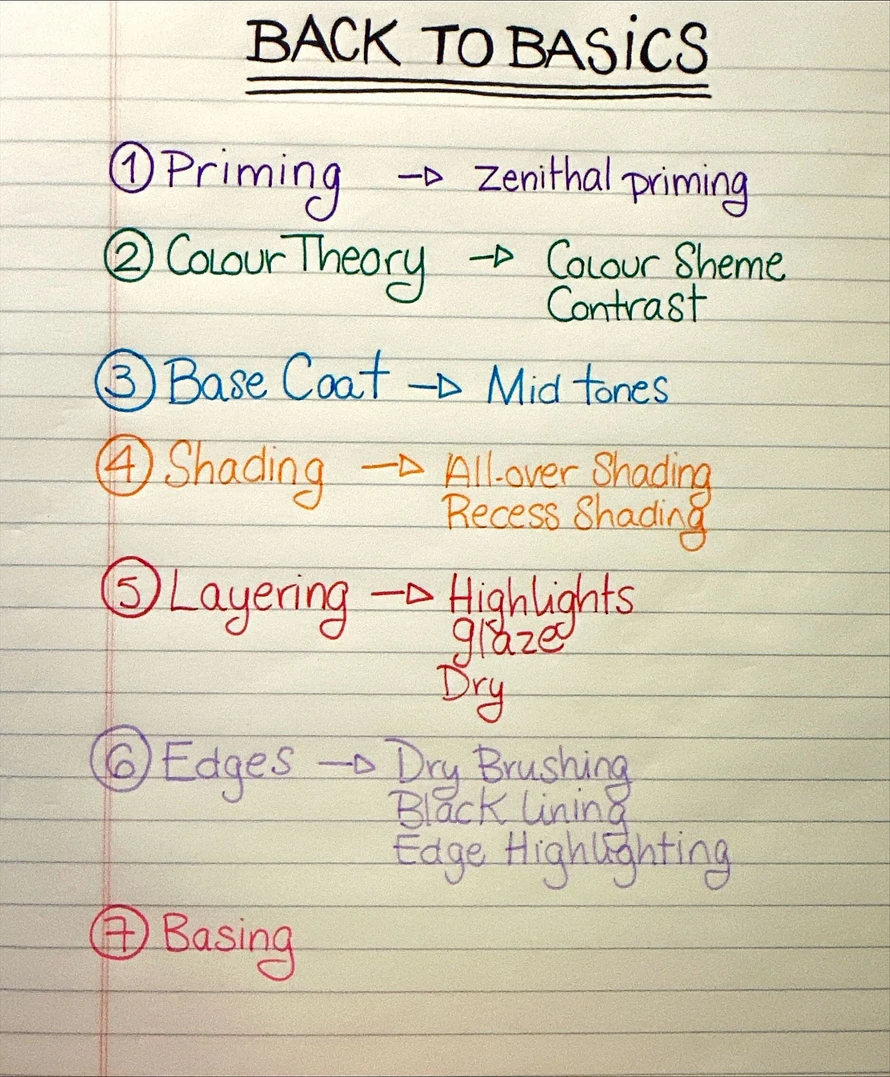
For 2 months, I practiced the miniature painting basics. You can check out the detailed painting miniature basics list here.
Finally, after a few months of practice, I decided to jump in and tackle the giant. I took the time to study the mini, which details I wanted to focus on, and how the light was hitting it. I was mainly looking forward to painting the skin folds.
You can watch the full painting process on YouTube.
Before you ask, we got this hill giant from a local hobby store, but you can find it in your local hobby stores or online if you search for “D&D Nolzurs Marvelous Miniatures: Wave 17: Hill Giant”.
Painting Materials
We were super lucky! AK Interactive sent us paint, paint brushing and terrain material for this project! Below, you can find the material list we used for this giant:
-
AK Interactive 3rd Gen Acrylic Paints
- Human Flesh Tone Set
- Orcs and Green Models Set
- AK Fine Detailed Round Brush Synthetic Size 1 and 2
- AK Interactive Rust Basecoat Spray Primer
- AK Puddles
- AK Desert Sand
- AK Muddy Ground
- AK Tufts
- Old Paint brush for base coat
- Dry brush (Or make up brush)
- Wet Palette
- Paper Towel
- Water Cup
- Metal Pin for painting the pupils
- Putty for minis and models
- Hubby Knife
- Silicon tools and old paint brush for basing and putty
- Sanding sticks
- White Glue or Basing Glue
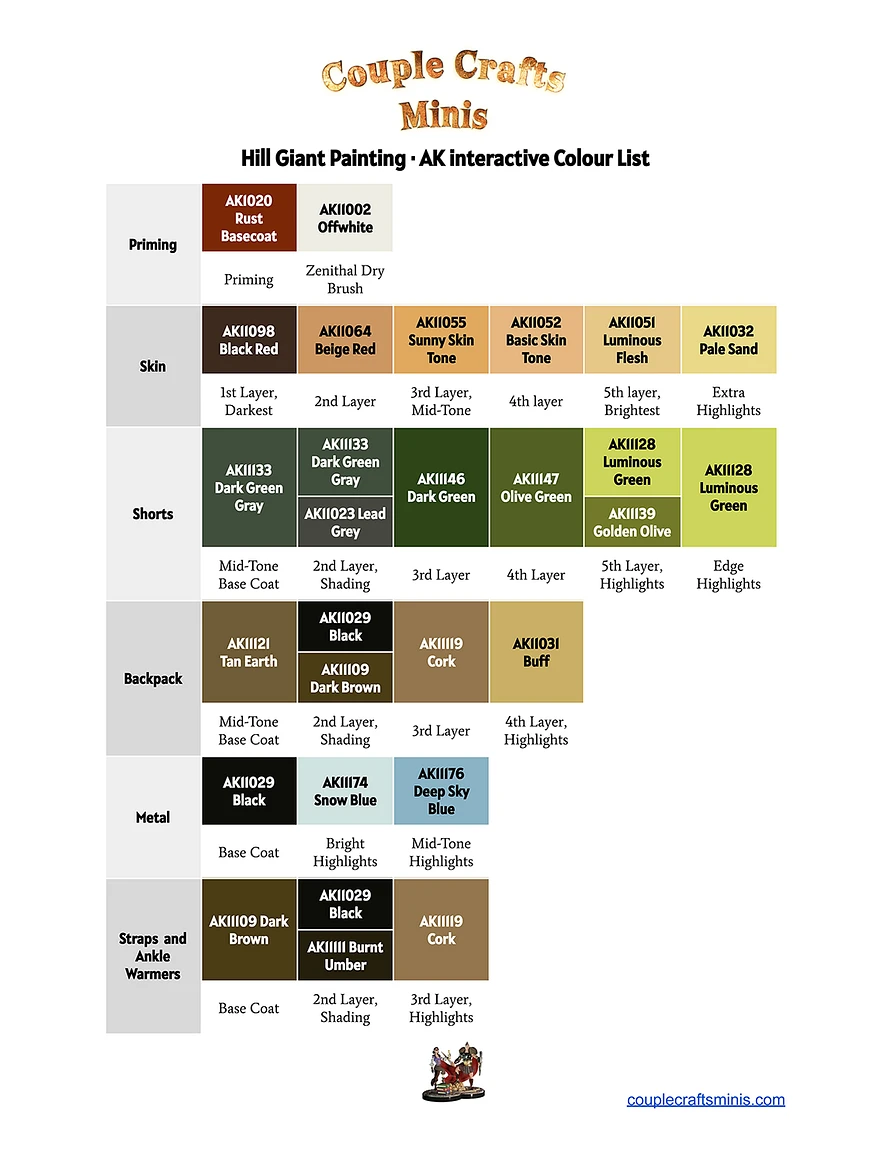
Hill Giant AK Interactive Paint Colour List
I made a chart with the colours I used for each part and each layer. You can download a PDF of the table right here.

Hill Giant Painting Process — Step-by-Step Summary
Preparation
-
Study the miniature to understand forms and details.
-
Sand away mold lines, joints, and imperfections.
-
Fill joints with putty using silicone sculpting tools.
-
Sand the putty smooth once cured.
Priming & Initial Light Map
-
Prime the model with a “smart” color (e.g., dark rust as the skin base).
-
Apply a zenithal dry brush with off-white to establish light direction.
Skin Painting
-
Apply the skin base coat in ultra-thin layers and glazes, working from dark to light following the zenithal map.
-
First pass with an old brush.
-
Layering with a high-quality size-2 round brush.
-
Offload paint on a paper towel before applying.
-
After initial layers, refine the skin with mid-tones to blend missed spots, tone down overly dark areas, and reinforce highlights.
Clothing (Shorts)
-
Base coat with a mid-tone color.
-
Mix in darker tones to shade the recesses.
-
Build highlights with progressively lighter mixes to achieve the desired hue.
-
Add edge highlights with the brightest green.
- Light dry brushing on the shorts with luminous green (backed off before it became too muddy).
Accessories & Details
-
Switch to a size-1 brush for small features (strap metal rings, etc.).
- Base coat the straps.
- Shade and highlight all straps.
-
Shade and highlight the ankle warmers.
Backpack Work
- Base coat the backpack. Painted the whole area first to set a foundation—detail work on ropes comes later.
-
Shade the backpack with a heavily diluted mix of dark brown and black.
-
Paint and shade the patches.
-
Layer and edge-highlight the backpack.
-
Lightly dry brush to pick up texture without muddying the surface.
- Base coat the net and ropes.
Natural Elements (Club, Rocks, Branch)
-
Base coat the branch and rock.
-
Highlight the branch.
-
Shade the rock.
-
Paint club ropes and highlight the ropes.
-
Highlight and lightly dry brush the rock.
Metal & Final Details
- Base coat metal rings in black.
-
Add metal highlights.
-
Paint final details (feathers, patch touch-ups, toenails, base rock, etc.).
-
Paint the pupils using black and a metal spike for precision.
Basing
-
Build the base using muddy ground texture, desert soil, puddles, and grass tufts.
I hope this was helpful! Thank you for supporting us and for reading!